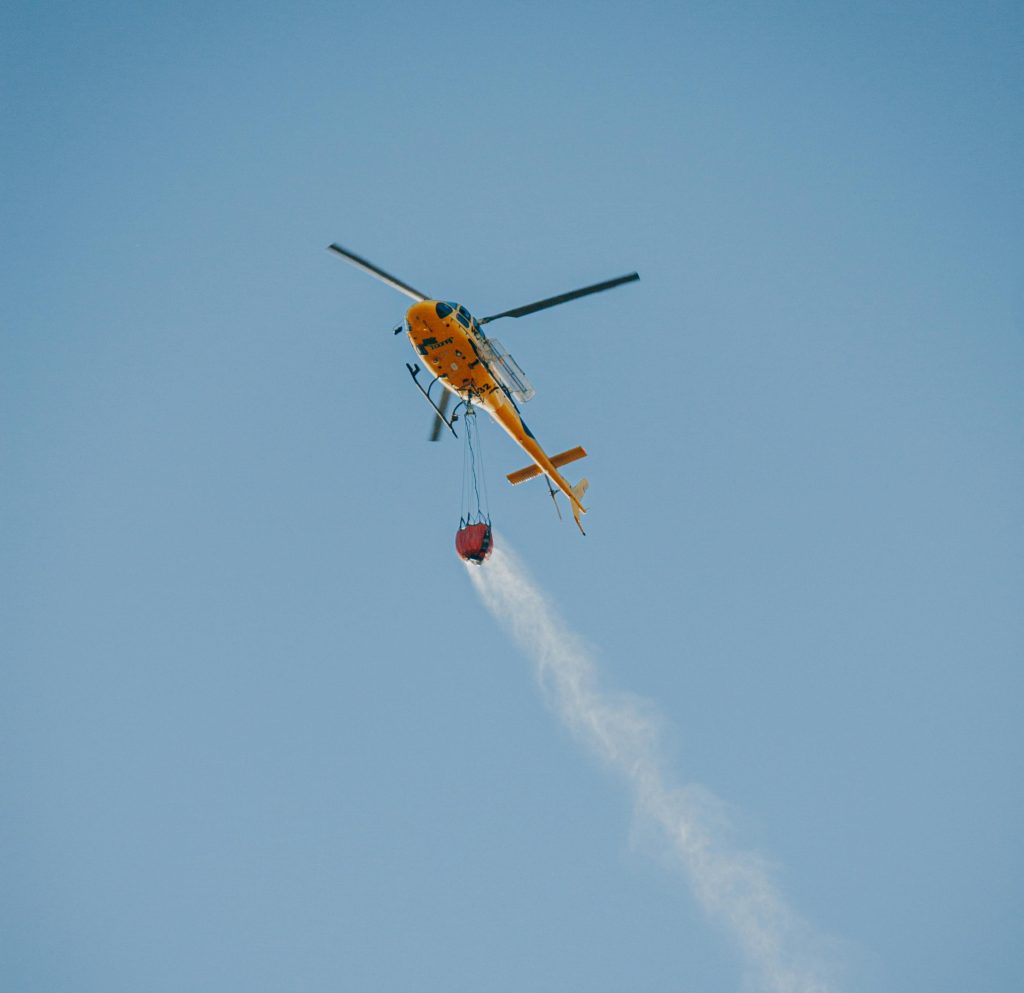
I have a new article out today in the journal Informatics and Telematics called An imperative to innovate? Crisis in the sociotechnical imaginary. This looks at a few different kinds of crisis technologies — tools designed to help with issues like pandemics, wildfires and floods — to consider how such events change and intensify the trajectory of tech design.
It is open access so free to read for everyone. I started writing this following the 2019/2020 bushfires in Australia that affected my own family, during the long pandemic years at home, and through the severe floods that hit across Australia. So many tech solutions gained traction in this time. This article has come out just after the 2025 LA wildfires and I am sure we will see a new flurry of developments promising a fix.
Crises are seen as laboratories of innovation. These high-pressure contexts give rise to hurried and often uncritical adoption of new tech by organisations who wish to find – and be seen as committed to finding – solutions.
My analysis draws together theorising on sociotechnical imaginaries and crisis with Berlant’s notion of the intimate public. To put it very simply, Berlant uses the idea of the intimate public to show how a normative vision of a good future society is materialised and made affective through the figure of crisis. They talk about crisis via gender, sexuality, reproduction and American politics but there’s plenty of valuable stuff in this work for thinking about the affective ties of collective social forms and how publics are characterised in relation to crisis technologies.
The article is based on a textual analysis so I focus on the discursive strategies at play in various documents about crisis tech. As well as an emphasis on speed, innovation is tied to (or realised through) complexity and visualisation. The capacity to address complexity and/or operate with complexity is highlighted as a major imperative and itself an innovation. Too, AI is recurrently presented as a tool for and tool of data visualisation. AI appears as a visual and visualising thing: as having an aesthetic form, and novelty and innovation lies in its visual affordances. As such, we might look at AI as a visualisation technology; in the context of crisis, AI is seemingly innovative by being a technology of visualisation.
I was also interested in who these crisis technologies seemed to really be for – who they aimed to support and help via direct use or downstream benefit. There were many specific and general/vague users and beneficiaries talked about in the documents. Something that stood out was how significant the idea of vulnerability was. This isn’t that surprising given the context; we are indeed vulnerable to the accelerating and cascading impacts of climate change.
How vulnerability is deployed however seeds a logic of paternalism into our sociotechnical imaginary (or maybe intensifies and broadens the long-standing paternalism of the tech industry) to make very specific kinds of technological innovation a moral imperative for the good of all (literally, given these crises, everyone alive today and in the future).
Overall, I hope this article raises some generative questions for future research on the social dimensions of current development trajectories: how people are captured and in what ways they are (and are not) seen. Further theorising on innovation and publics could further reveal the significance of crisis within sociotechnical imaginaries, such as how particular users are prioritised as urgent within developing agendas and how visions for technological change draw collective subjectivities into play.
Watson A (2024) An imperative to innovate? Crisis in the sociotechnical imaginary. Telematics and Informatics 98: 102229.
 home
home 